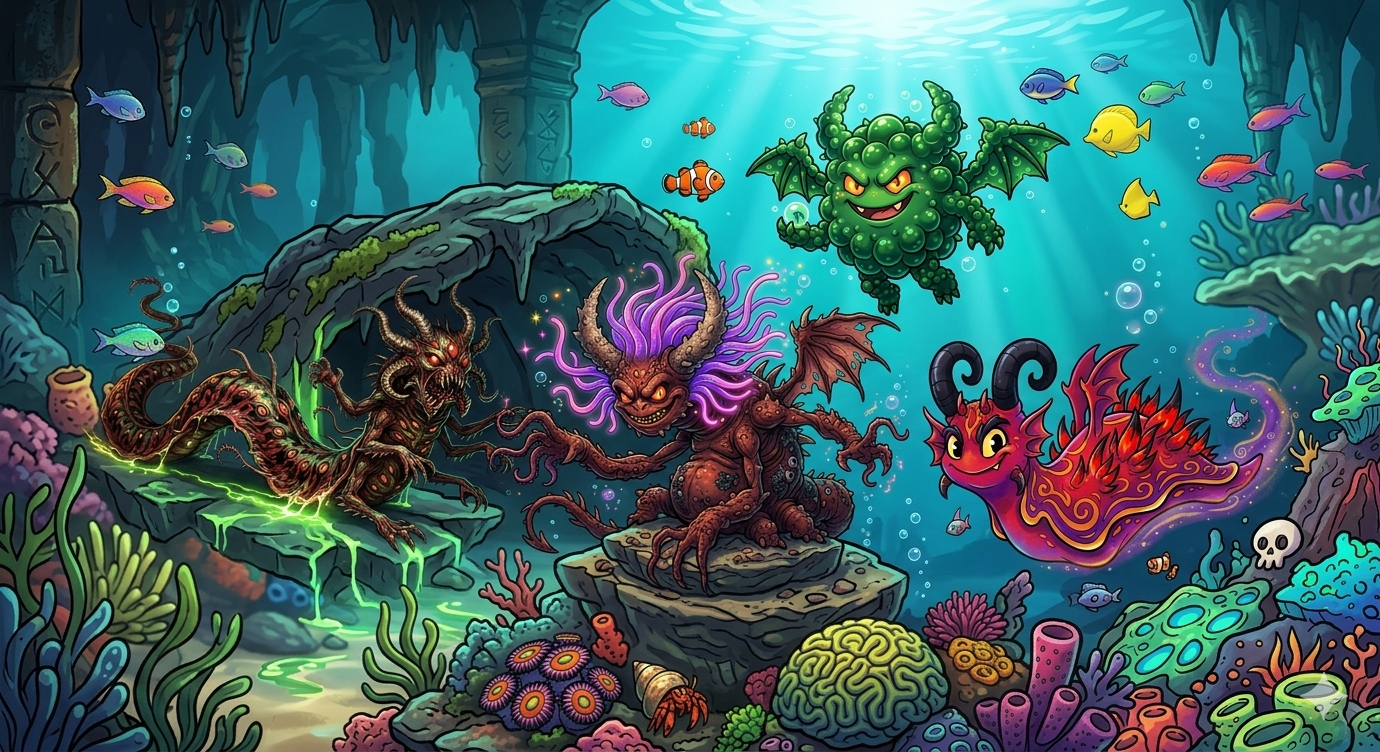
Prevention is better than cure. Use a Coral Cot.
Don’t let pests push you out of the hobby you love. We know the frustration of battling Aiptasia and algae, but a tank crash doesn't have to be the final chapter. It’s time for a fresh perspective. Let’s rebuild, refine, and move forward. Bit by bit, we’ll turn the tide.
Our Approach
In a hobby where life often gets in the way, proactivity is the key to longevity.
A tank crash is often just one unvetted coral or one hasty treatment away. Don't take the risk. By taking the time to test and treat arrivals beforehand, you protect your investment—and your passion.
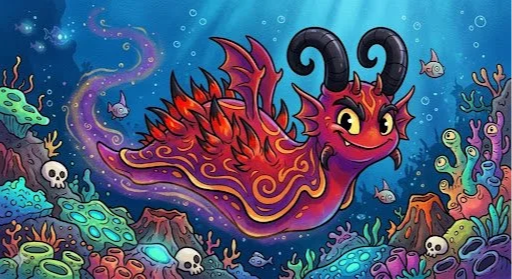
Flatworms.
Flatworms are destructive reef pests that smother corals, blocking the light and nutrients they need to survive. Species like AEFW go a step further by actively consuming coral tissue, leading to rapid colony death. Because they reproduce quickly and release lethal toxins when they die, an infestation can easily crash an entire tank's chemistry.
How will a Coral Cot will help?
Quarantining corals serves as a vital firewall, allowing you to intercept flatworms in a controlled environment before they reach your main display tank. By placing new arrivals in a separate "QT" tank, you can perform aggressive diagnostic coral dips—using solutions like iodine or pine oil—which irritate flatworms and cause them to detach from the coral skeleton where they can be easily siphoned away.
Since most dips do not kill flatworm eggs, a quarantine period of 4–6 weeks is essential to account for their life cycle; this window allows any hidden eggs to hatch so the new hatchlings can be eliminated through follow-up treatments. This isolated observation period ensures that you aren't introducing nearly invisible, camouflaged predators like AEFW into an established reef where they would be much harder to treat.
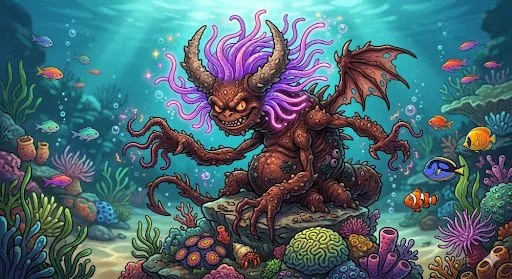
Aiptasia.
Aiptasia are aggressive "glass anemones" that use potent stinging cells to damage or kill nearby corals and claim their territory. They reproduce explosively; even a single cell left behind during removal can regenerate into a new anemone. Once established, they quickly overrun rockwork, outcompeting ornamental species and becoming a localized plague that is notoriously difficult to eliminate.
How will a Coral Cot will help?
Quarantining provides a critical observation window to catch Aiptasia that are often invisibly retracted during the initial purchase. In a controlled environment, you can spot these pests as they emerge and safely eliminate them using targeted chemical injections or by scrubbing the coral plugs without risking the health of your main display. Most importantly, it allows you to "re-frag" corals—removing them from potentially infested original bases—to ensure no hidden anemone fragments or cells enter your permanent reef.
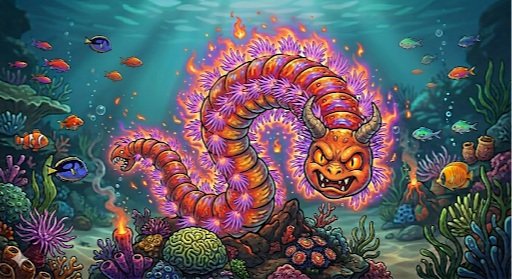
Fireworms.
Fireworms are destructive reef pests primarily feared for their venomous, needle-like bristles and predatory appetite. Unlike beneficial scavengers, true fireworms (like the Bearded Fireworm) can actively prey on corals, anemones, and small crustaceans, eating the tissue right off the skeleton. Their bristles are made of calcium carbonate and break off easily in the skin of fish or hobbyists, causing intense stinging, inflammation, and potential infection. Because they are nocturnal and hide deep within rockwork, an infestation can grow unnoticed until they begin causing significant damage to your prized livestock.
How will a Coral Cot will help?
Quarantining acts as a defensive barrier against fireworms by forcing these nocturnal predators out of hiding in a controlled, bare-bottom environment. Using specialized coral dips irritates the worms, causing them to bail out of crevices, while the confined space of a quarantine tank makes it easier to lure them into traps using bait. This period of isolation ensures that these venomous, coral-eating hitchhikers are identified and removed before they can disappear into your main display's permanent rockwork.
Since most dips do not kill flatworm eggs, a quarantine period of 4–6 weeks is essential to account for their life cycle; this window allows any hidden eggs to hatch so the new hatchlings can be eliminated through follow-up treatments. This isolated observation period ensures that you aren't introducing nearly invisible, camouflaged predators like AEFW into an established reef where they would be much harder to treat.
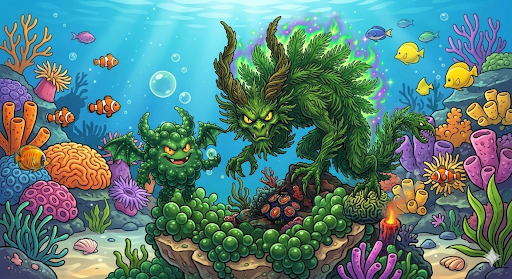
Algae.
While some algae is natural, nuisance varieties like Hair Algae or Bryopsis can quickly become a biological nightmare for a reef tank. They act as aggressive competitors, growing over coral tissues to physically smother them and block the light necessary for photosynthesis. Beyond aesthetics, uncontrolled algae blooms can destabilize water chemistry by causing massive swings in dissolved oxygen and pH levels. Furthermore, dense algae mats trap detritus, fueling a "nutrient loop" that can lead to a total ecosystem crash if the algae begins to die off and rot all at once.
How will a Coral Cot will help?
Quarantining prevents nuisance algae by allowing for aggressive physical and chemical removal in a controlled environment. It provides the opportunity to scrub plugs, apply targeted hydrogen peroxide dips, or "re-frag" corals onto sterile bases to ensure no spores or fragments enter your display. This isolation period ensures that invasive species like Bryopsis or Bubble Algae are eradicated before they can exploit the stable nutrient levels of your main reef.